Peripatos: Walking Around Greece
Amy Hackney Blackwell & Christopher Blackwell
September, 2025
This is the presentation that accompanied an OLLI class that Amy and Christopher taught at Furman University in the Fall of 2025.
Where have we walked?
A quick overview!
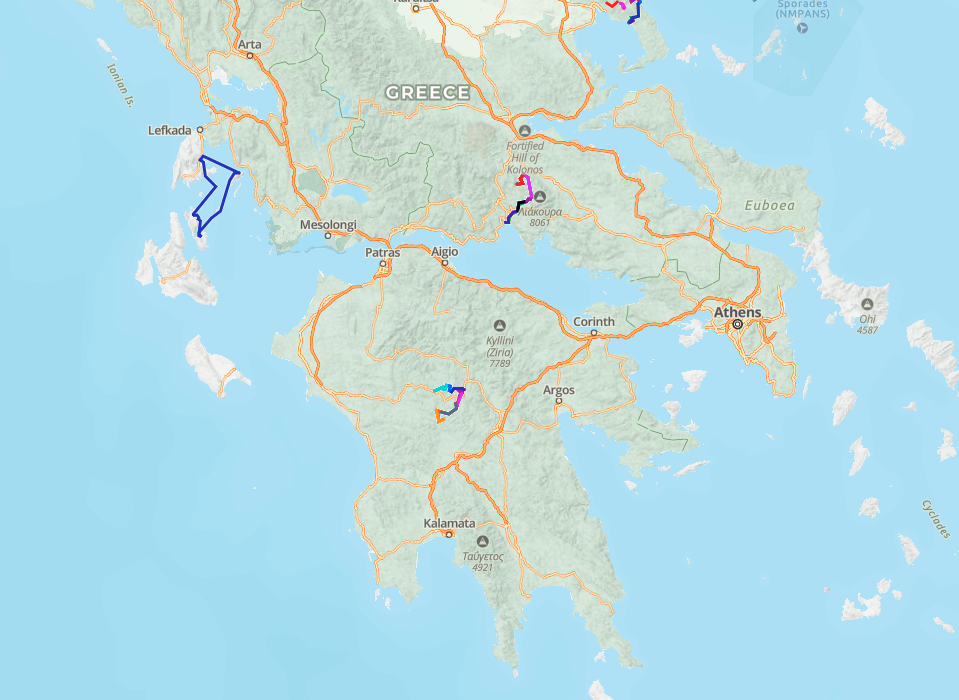
Overview: Greece!
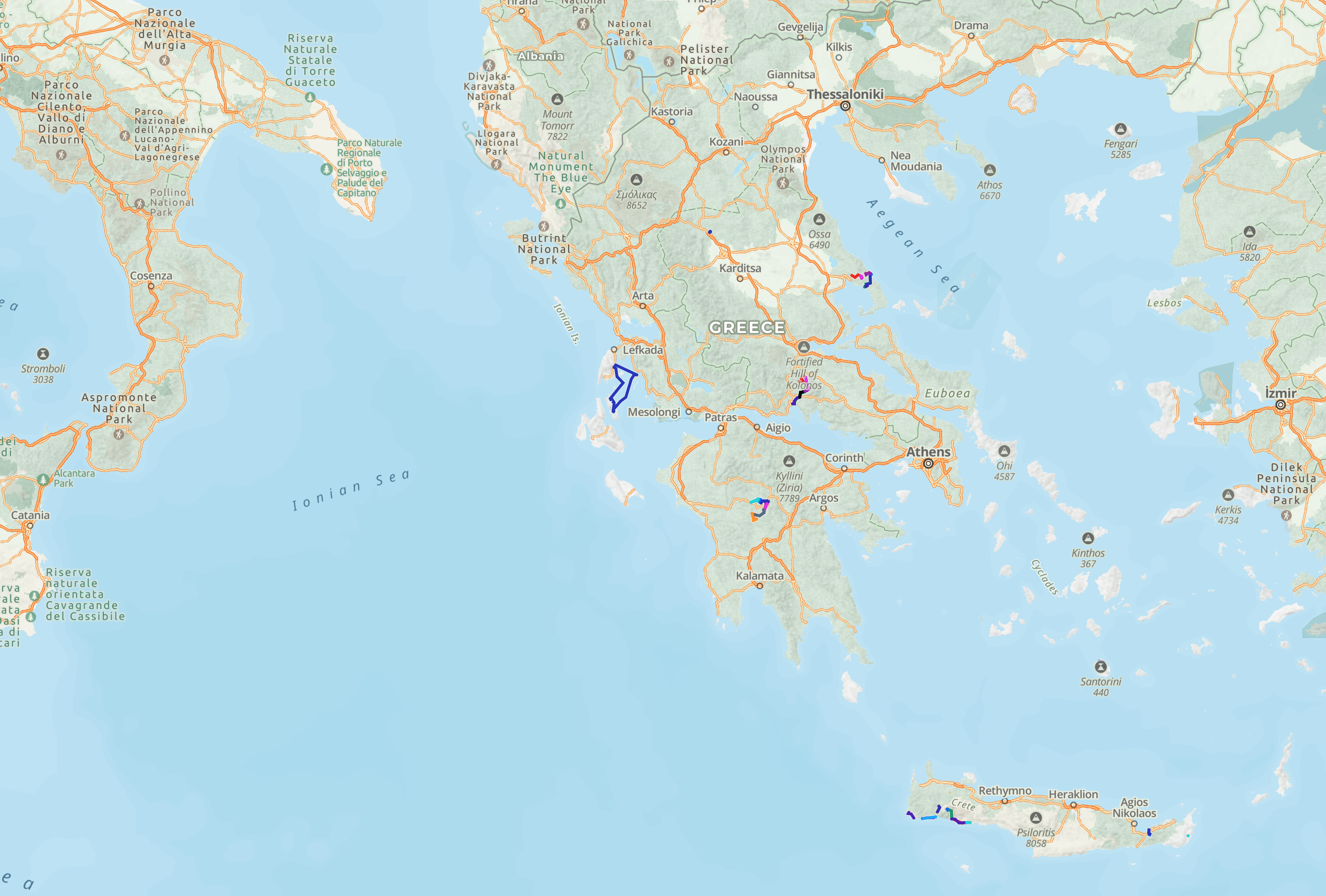
The heading is link to a GaiaGPS.com page showing Greece and all our hikes.
Thoughts on Navigation
GaiaGPS offers an excellent mobile app, that works great online or offline. And you can access your hikes and all your stats over the web, as you see here. If you log into the website and the mobile app, everything syncs automatically.
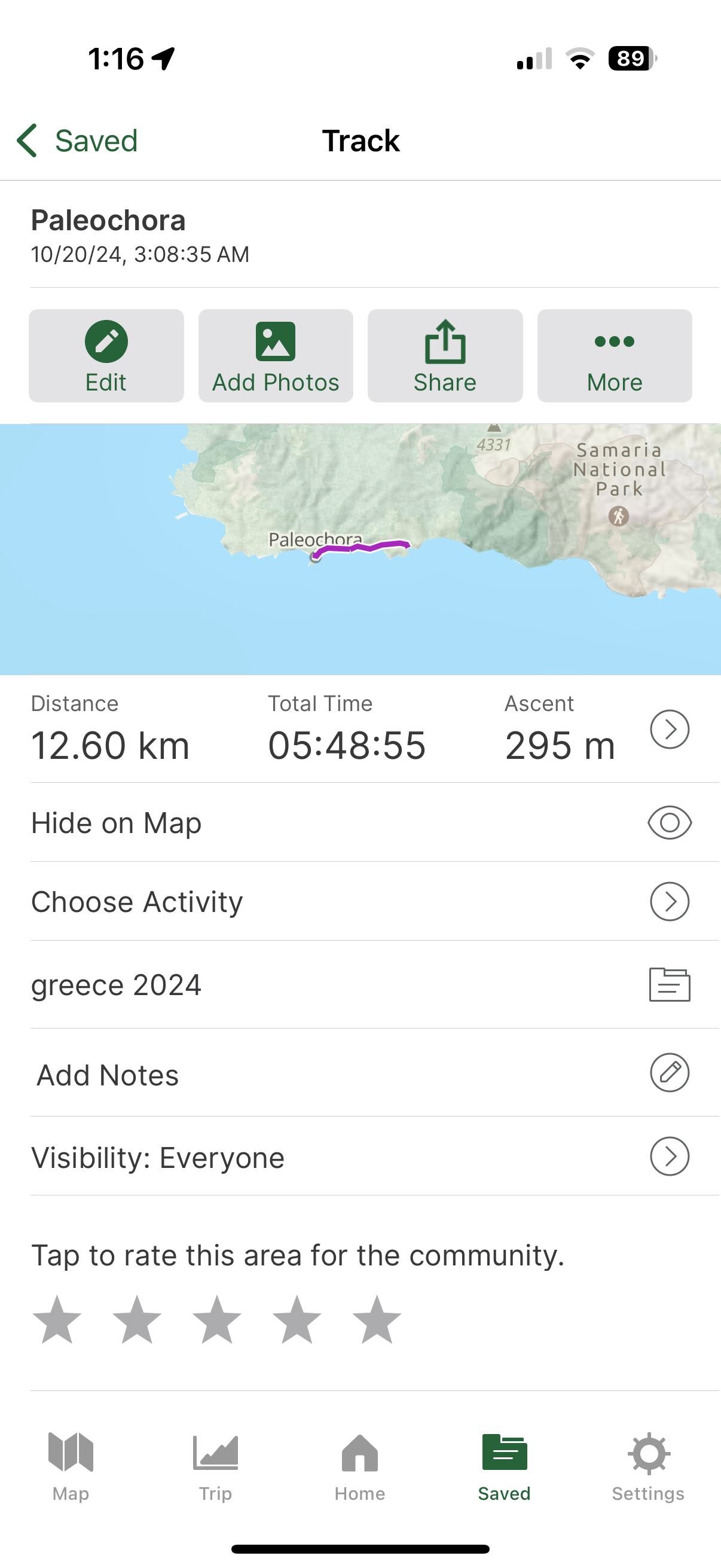
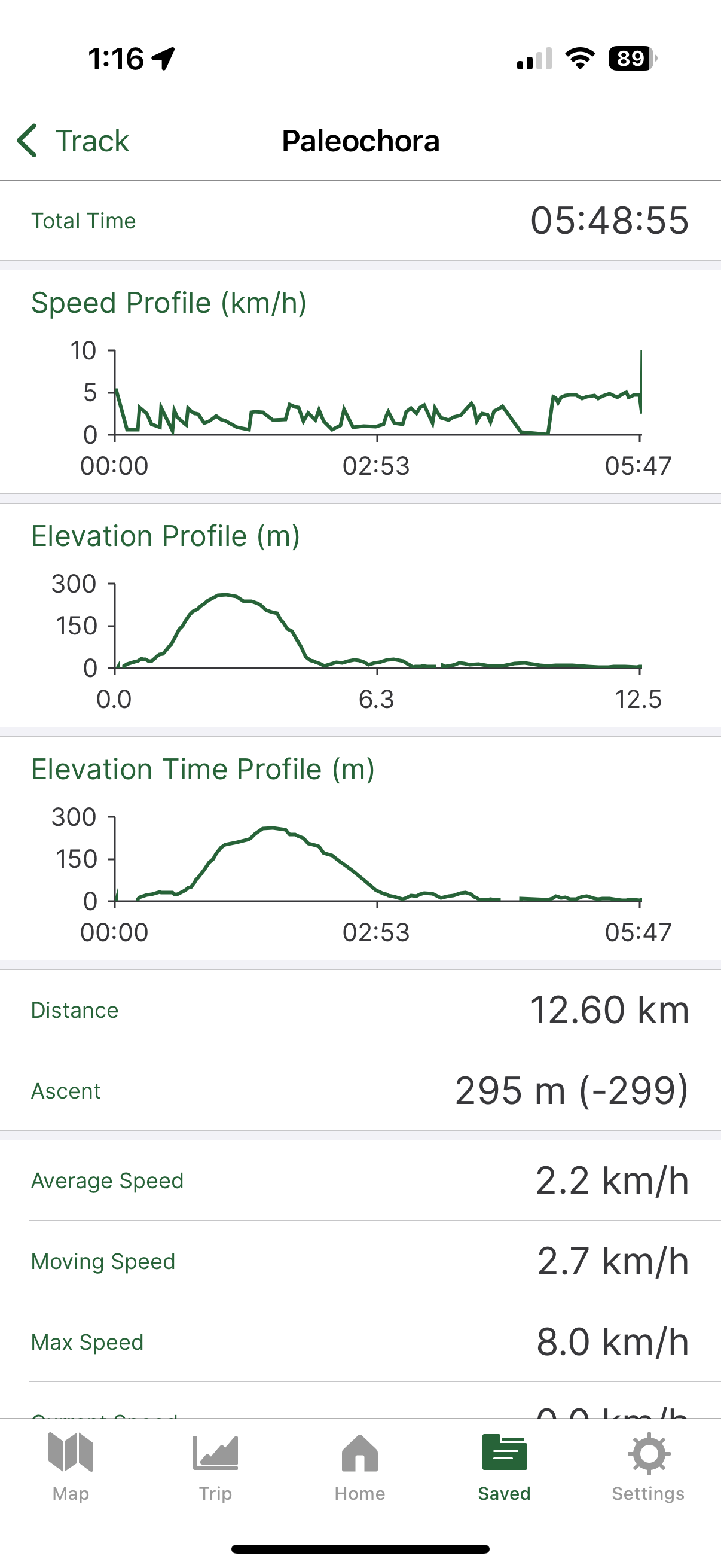
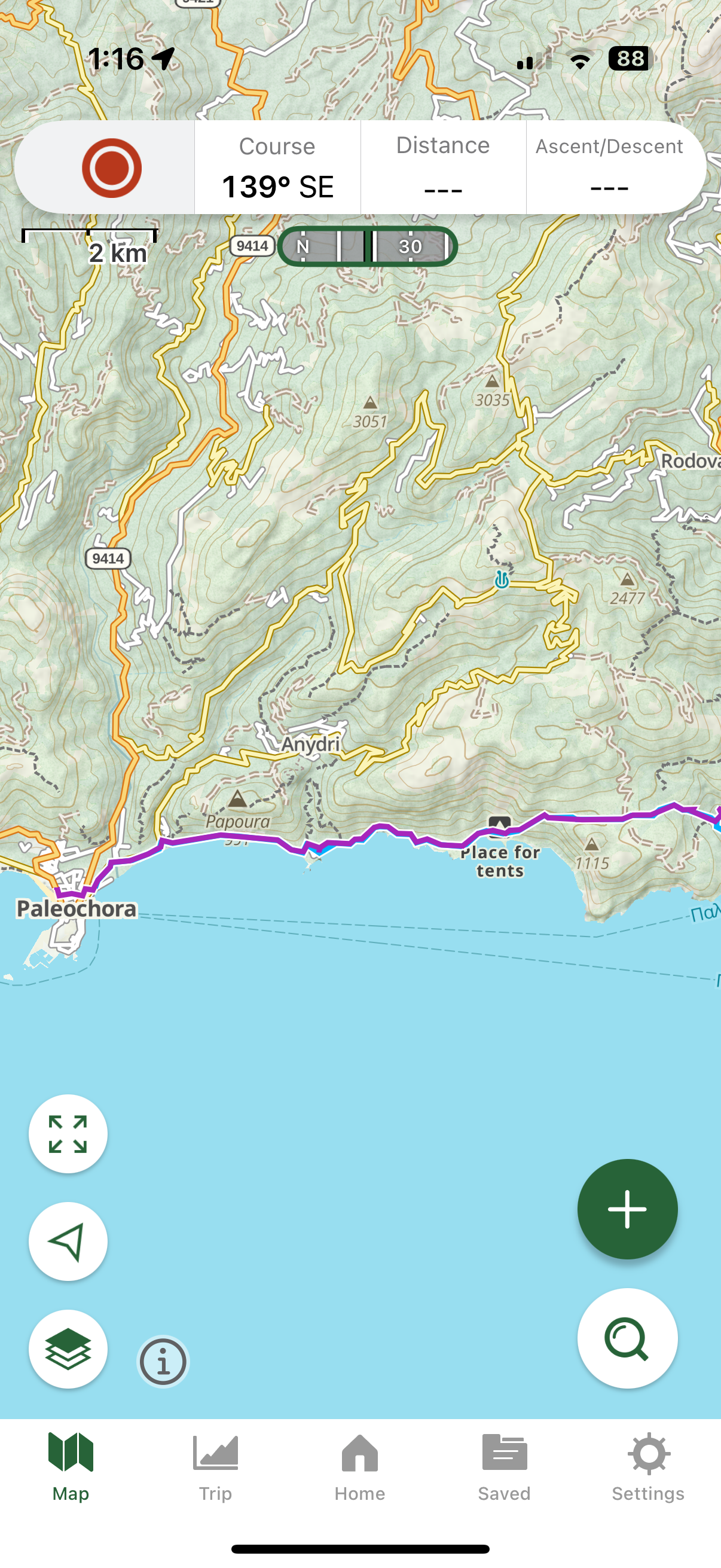
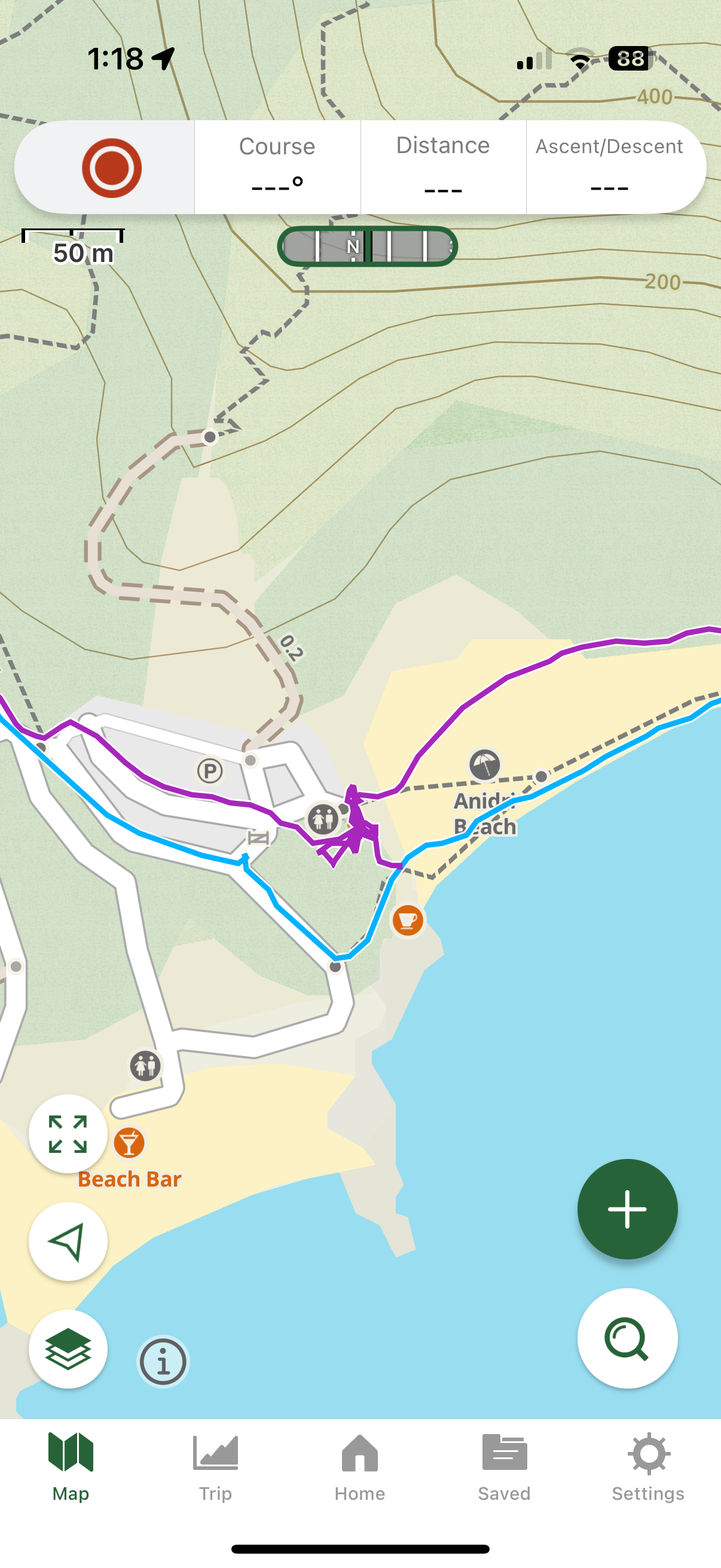
The trick (!!!) is to remember to “start tracking” at the beginning of a walk, and to end it when you’re done (before you get into a car and drive somewhere).
Hiking the Mainland of Greece
Map showing a little wrong turn!

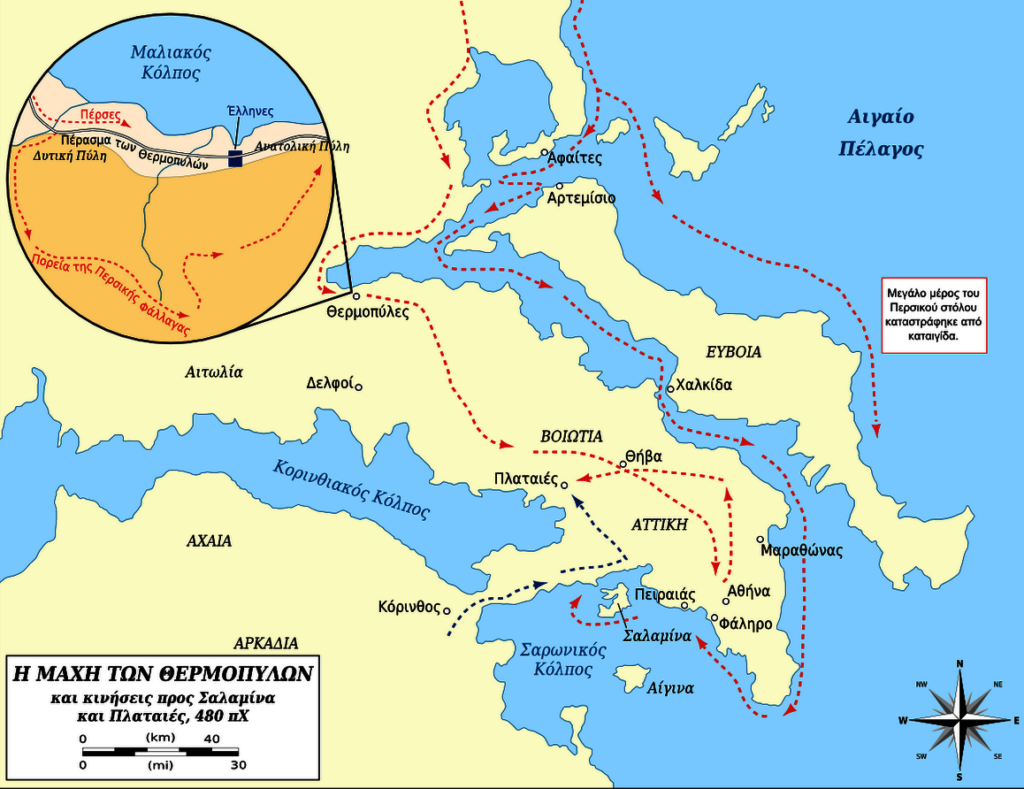
The Battle of Thermopylae!
490 BC. Darius, King of Kings of Persia, invaded Attica, where Athens is. There was a battle at Marathon.
480 BC. The Persians, under King Xerxes, invaded mainland Greece to punish Athens for stirring up trouble with the Greek cities of Asia, their Ionian cousins.
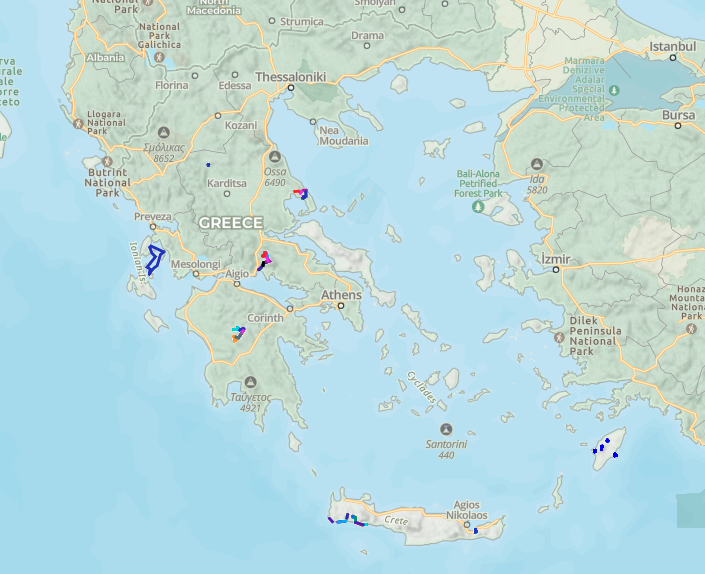
Around the Islands of Greece
Rhodes, Santorini
First, a very few notes on tech for travel photography.
iPhone.
Just iPhone.
(Comparison to my lovely, expensive Fujis…)
Fuji:
- The best lenses in the world.
- Fun physical controls.
- The best in-camera processing.
- Looks classy, like $10,000 Leika.
iPhone:
- Instant sharing.
- You’ve got one.
- Software controls. Can be, and are, updated.
- Supercomputing processing… not to be overlooked!
- [Note on Samsung phones… which go a bit farther!]
But you are using your iPhone for other things!
- navigation,
- WhatsApp-ing your gal in Delphi or your guy in Kathmandu
- …and it does have limited storage. So…
Gimble Camera, or “Steady-cam”: DJI Osmo Pocket 3.
- Light.
- Quick.
- Good sound (with the included microphones and fuzzy thingies).
- Huge, cheap storage via Micro-SD Cards.

Fake GoPro!
Daily discipline.
Get all the day’s pics and videos off every device; save them in an orderly fashion. (It took me ten years to internalize this lesson.)
The Aegean
Let’s Learn Greek!
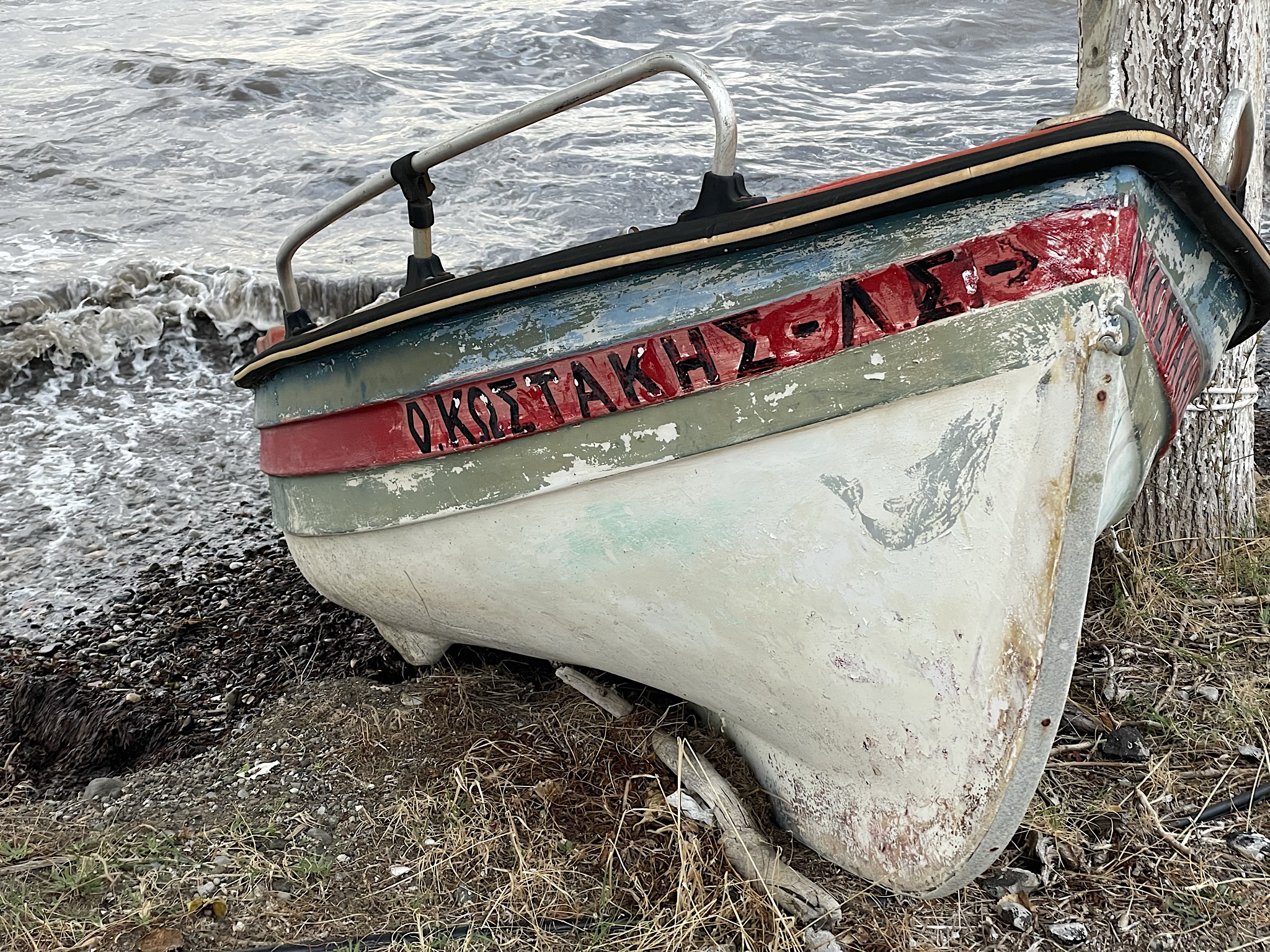
ἡ ναῦς (hē naus) = “warship”. Gives us “nautical” and “nausea”.
τὸ πλοῖον (to poloion) = “cargo boat”.


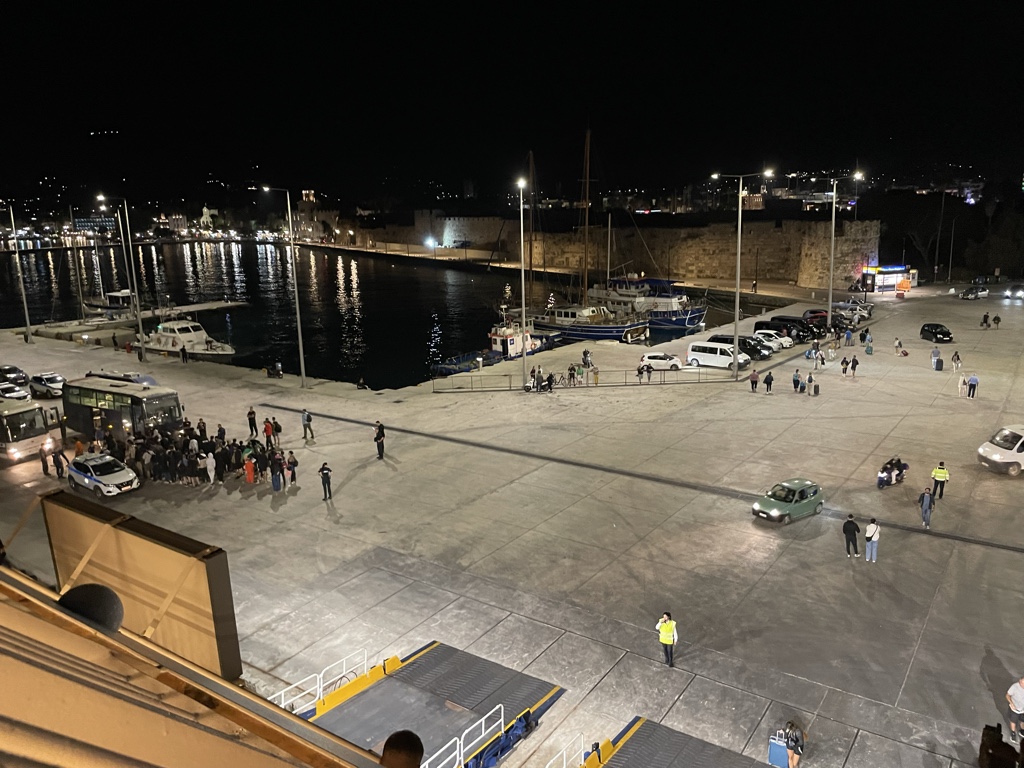
- All commerce on the islands depends on ferries!
- Very comfortable if you get a cabin. Beds and an en-suite bathroom.
- “Deck class” not so comfortable but cheap, and Greeks in particular don’t have a lot of money; people bunk down anywhere
- There’s an intermedediate class where you have basically an airplane seat, complete with in-seat entertainment.
- Bar, Pool Bar, Snack Bar, Casual Restaurant, White-tablecloth restaurant.
- The truck drivers seem to use the fancy restaurants! Maybe they get a deal? Or their boss just pays for it?
- Schedules are pretty good, but they can run late because of numerous stops with complicated loading and unloading; can be cancelled if weather is bad.
- Book online!
Advantages over flying
- Boarding
- Security
- Authenticity
Rhodes
- Touristic towns not so great - crowded, expensive, and don’t feel like Greece
- Close to Turkey - phones acted like we were there during part of the ferry rides
- The ferry ride from Athens to Rhodes is very long, around 16 hours, with lots of stops in islands
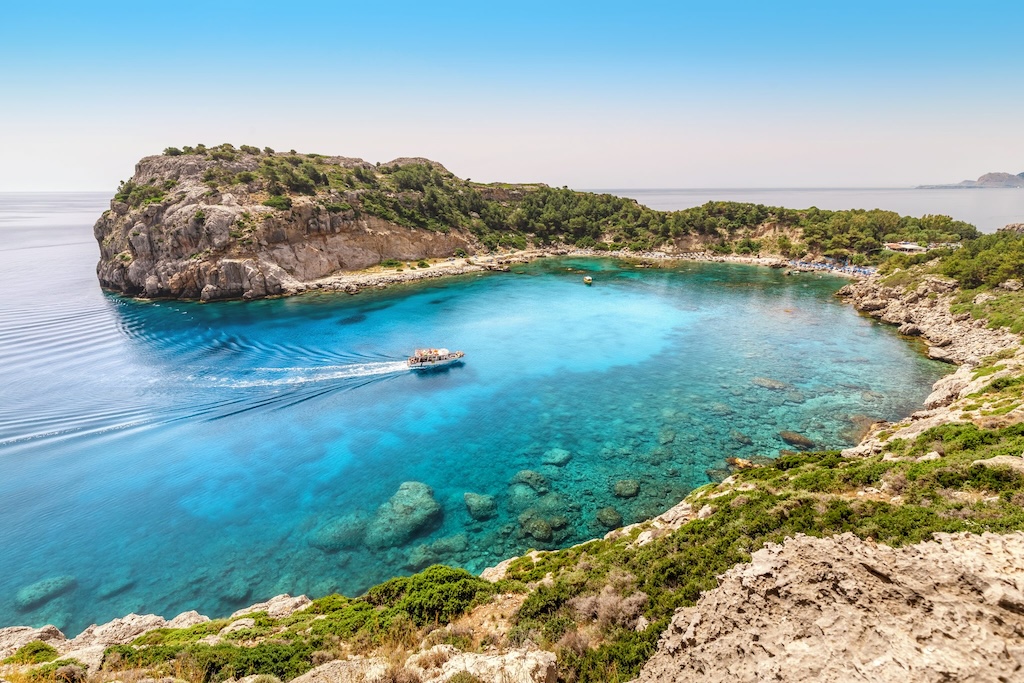
Rhodes was THE cultural center at the eastern edge of the Aegean; looking east is the Mediterranean
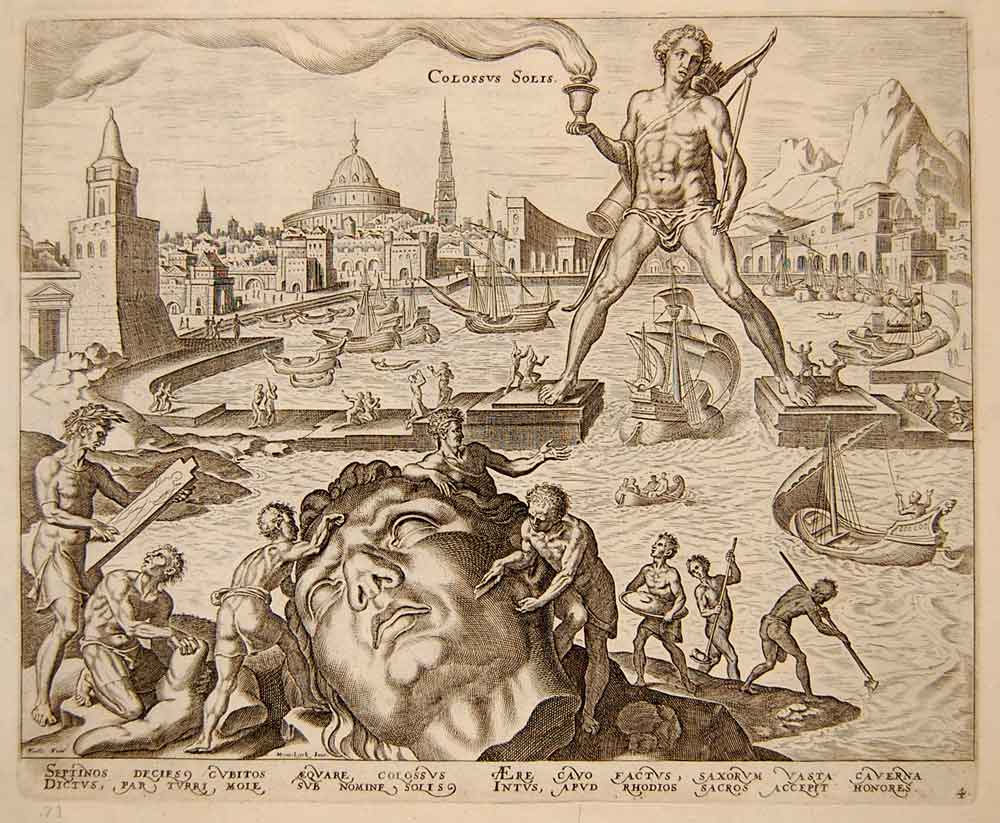
- People traveled from Rome to study rhetoric; it was the place to stop before sailing on to the Levant or back west to Athens/Rome
- Inhabited for thousands of years, famous for its naval fleet, important in ancient wars with eastern potentates
- Later occupied by Knights Templar and more recently by Italy - can still see Italian buildings in Rhodes City



Santorini
- Rationale: Our ferry schedule didn’t allow direct transit from Rhodes to Crete the day we were sailing, and Thira was important historically and archaeologically (Minoan Akrotiri)
- Volcano erupted 1645-1600 BCE, KABOOM – traces of this throughout the Bronze Age world
- Santorini today is a HUGE tourism center
- The scenery really is extraordinary, but the place doesn’t feel like Greece
- Even the Greeks who are there are mostly transient workers from the mainland and other places
- Maps can be misleading - our town was technically about 1 km from the port, but a 20-minute drive up a winding cliffside road
Our last island, in a different category, was Crete!
We’ll do Crete and our new adventures in Ithaca when we return from our travels!
…
Crete
Hiking in the White Mountains of Crete Coastal treks in Crete
- Crete was an important civilization center in its own right, with multiple Bronze Age sites.
- Southern edge of the Aegean.
- Now rapidly developing a beach tourism industry.
- Extremely rugged terrain – even after Rhodes, which was super rocky and rough, Crete kicked our butts.
- Why isn’t there a highway across the southern coast of Crete? Gorges! Also severely mountainous: “And you go up!”
- South coast has a bunch of ferries instead. Car-free towns - the Alps have these too.
- Samaria Gorge. Mostly waterless and toilet-less, huge tourist draw, uncertain whether it will be open, massive crowds in summer and omg it would be hot, walk is actually really long and hard!
Kavousi
Rationale:
- To see what it would be like to live on a mountaintop
- Why would you live on a waterless mountaintop? The only reason is if it was actually impossible to live safely lower down. (And how did they keep toddlers from toddling off the edge?)
- Living conditions were very poor. The artifacts “we” (Amy and her colleagues) found were very basic.
- Pirates! Pirates notorious for stealing people to sell as slaves. (St. Patrick was stolen from his family home in England and spent several years in Ireland as a shepherd-slave before escaping and becoming a priest.)
- Walking from the mountain to the sea
- Churches
Capturing the World of Odysseus
Lefkada, September-October, 2025.
New Bonus Slide!
Agenda
- To talk about food!
- To give some love to Western Greece.
- To share some mythology and literature.
- To make a connection with the past.
- To talk abot story-telling with cameras.
Food!


.jpg)
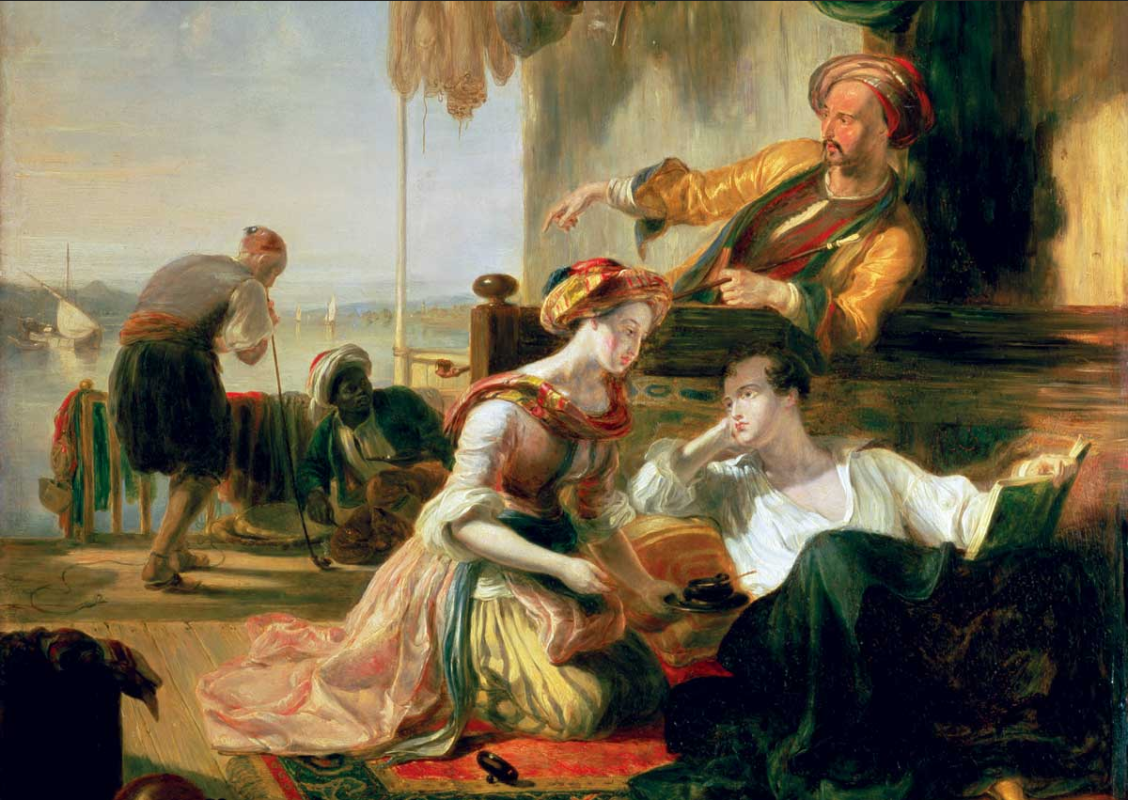
Romantic-period poet: Don Juan, Childe Harold’s Pilgrimage.
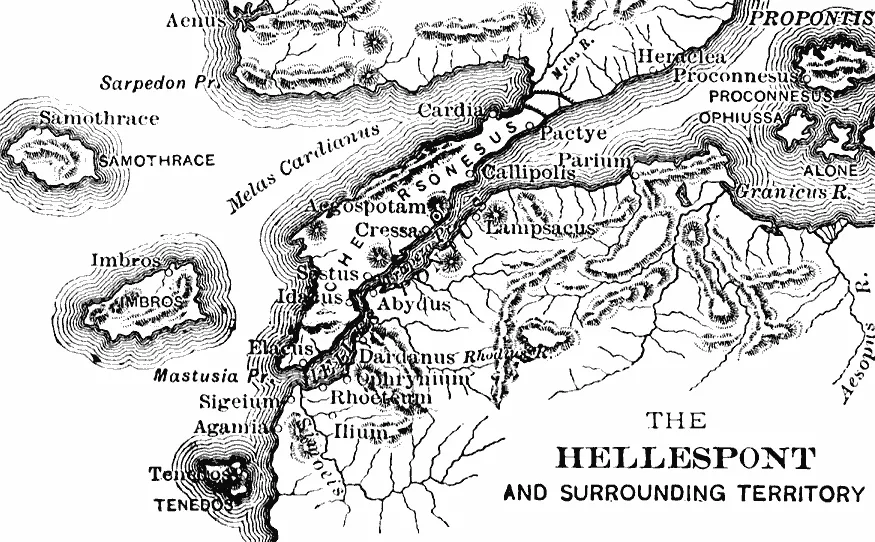
“Swimming the Hellespont”
In Greek mythology, Hero, a priestess of Aphrodite, lived in a tower in Sestos. Every night, her lover, Leander from Abydos, swam across the Hellespont to see her, guided by a lamp she lit.
On May 3, 1810, Byron reproduced this feat.
 If, in the month of dark December,
     Leander, who was nightly wont
 (What maid will not the tale remember?)
     To cross thy stream, broad Hellespont!
 If, when the wintry tempest roar’d,
     He sped to Hero, nothing loth,
 And thus of old thy current pour’d,
     Fair Venus! how I pity both!
 For me, degenerate modern wretch,
     Though in the genial month of May,
 My dripping limbs I faintly stretch,
     And think I’ve done a feat to-day.
 But since he cross’d the rapid tide,
     According to the doubtful story,
 To woo, – and – Lord knows what beside.
     And swam for Love, as I for Glory;
 ‘Twere hard to say who fared best:
 Sad mortals! thus the Gods still plague you!
 He lost his labour, I my jest:
     For he was drown’d. and I’ve the ague.
Sunium: The Temple of Poseidon
Images as story-telling
- Just like writing a novel.
- Manipulating time is the heart of storytelling.
- “Colorful SEXy Movement”: Attention to color, Selection & Exclusion, plus movement.
- Not reproducing reality, but distilling it and enhancing it.
Time-lapse photography
- Shows us the world we see all the time, but by manipulating time, shows it in a new light.
- Normal video: 30 frames / second. Timelapse, maybe 1 frame every 2 seconds.
- It has never been easier to do!
- The iPhone app “Pro Camera by Moment” is very good at this, and inexpensive.
- You need a tripod.
I can’t explain all the details, but you must make every camera setting manual!
Hardware for time-lapse videos
- Basic: Tripod, phone, Pro Camera by Moment iOS app (vel sim.)
- Fancier: Gimble+phone, like the DJI Osmo Mobile, or gimble camera like the DJI Pocket 3.
- Probably, an external battery to keep the whole thing running while you wait for hours to complete the shot.
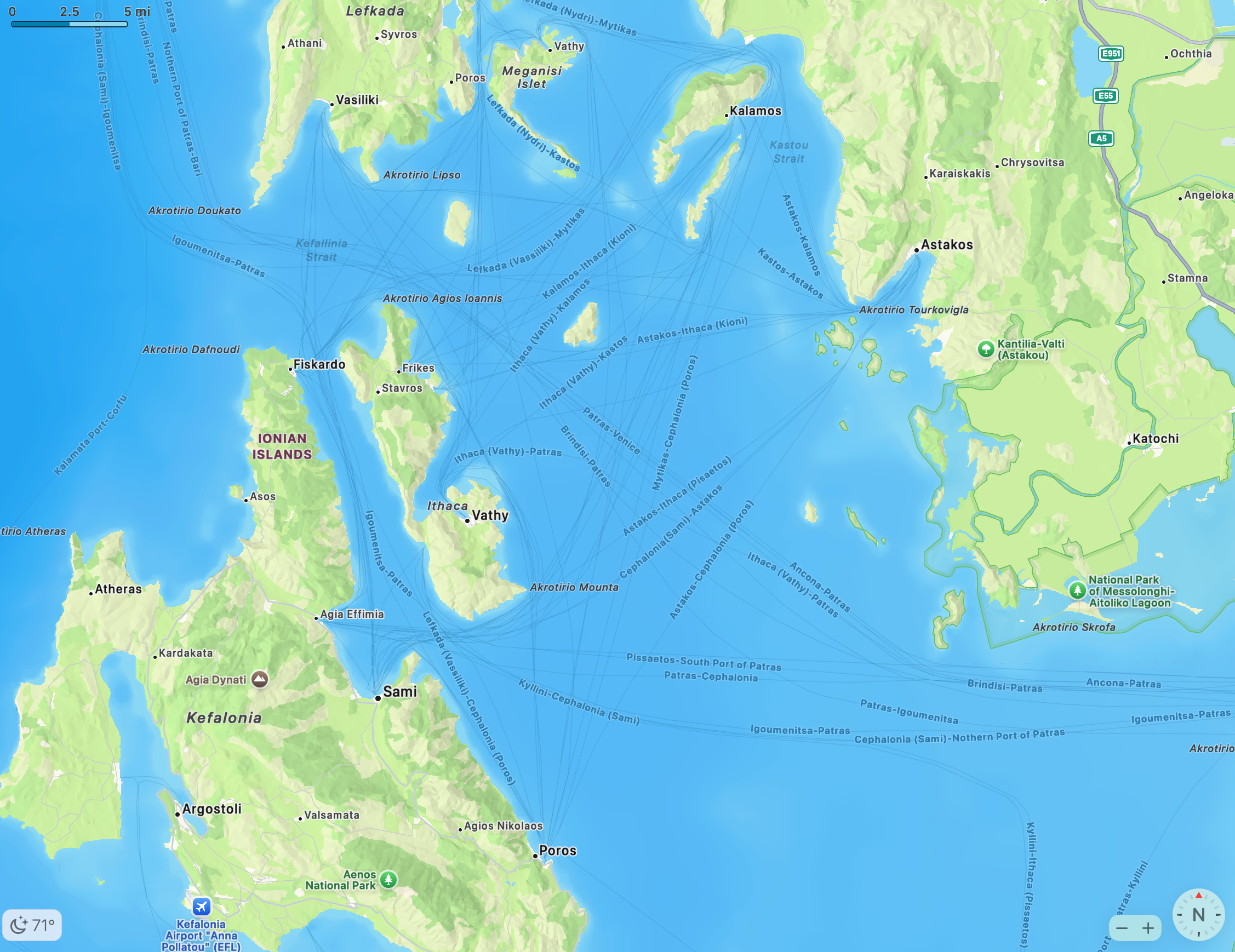
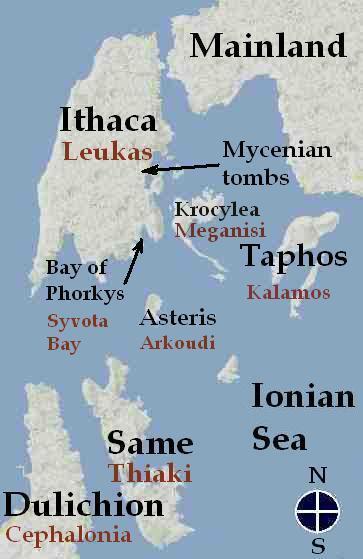
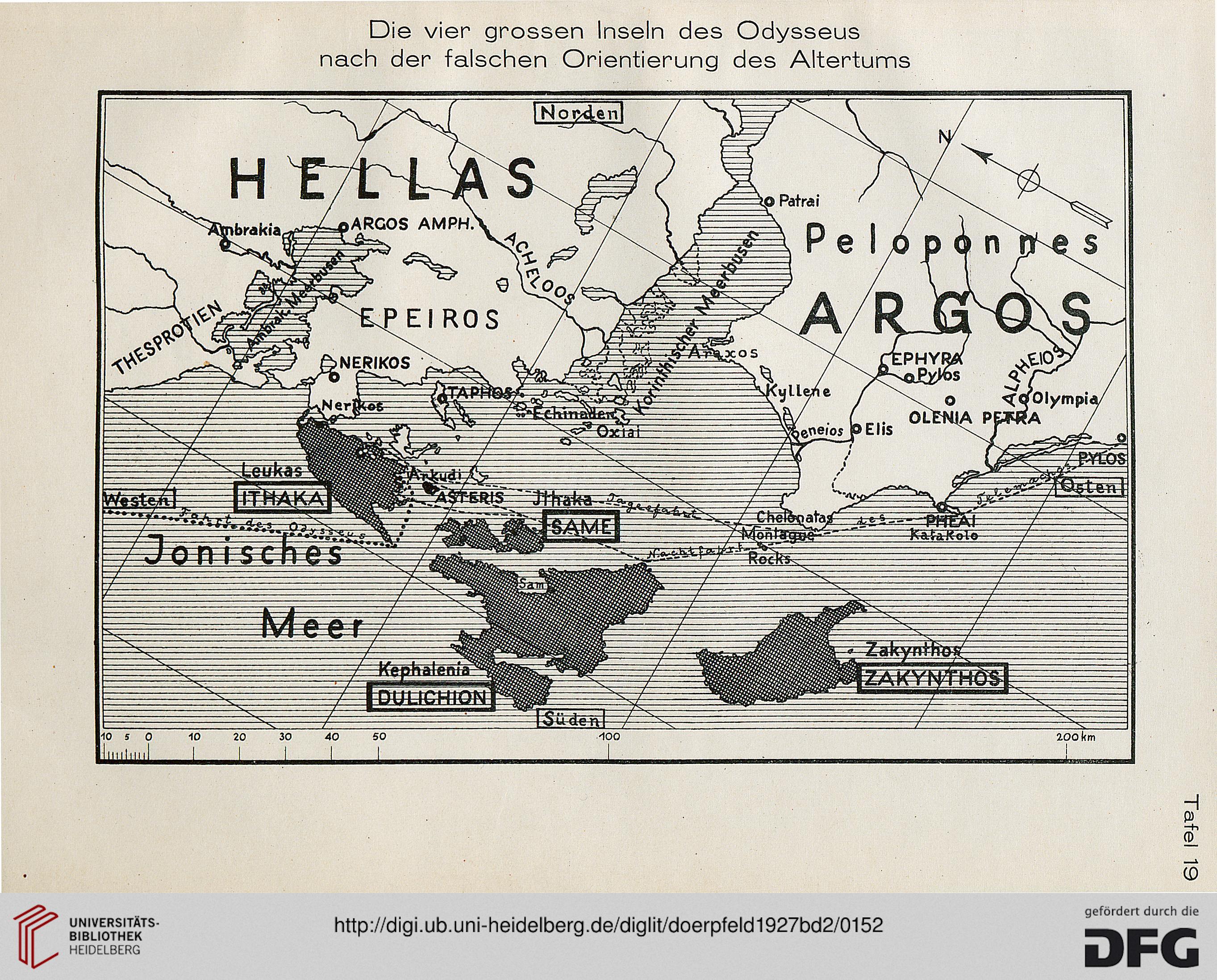
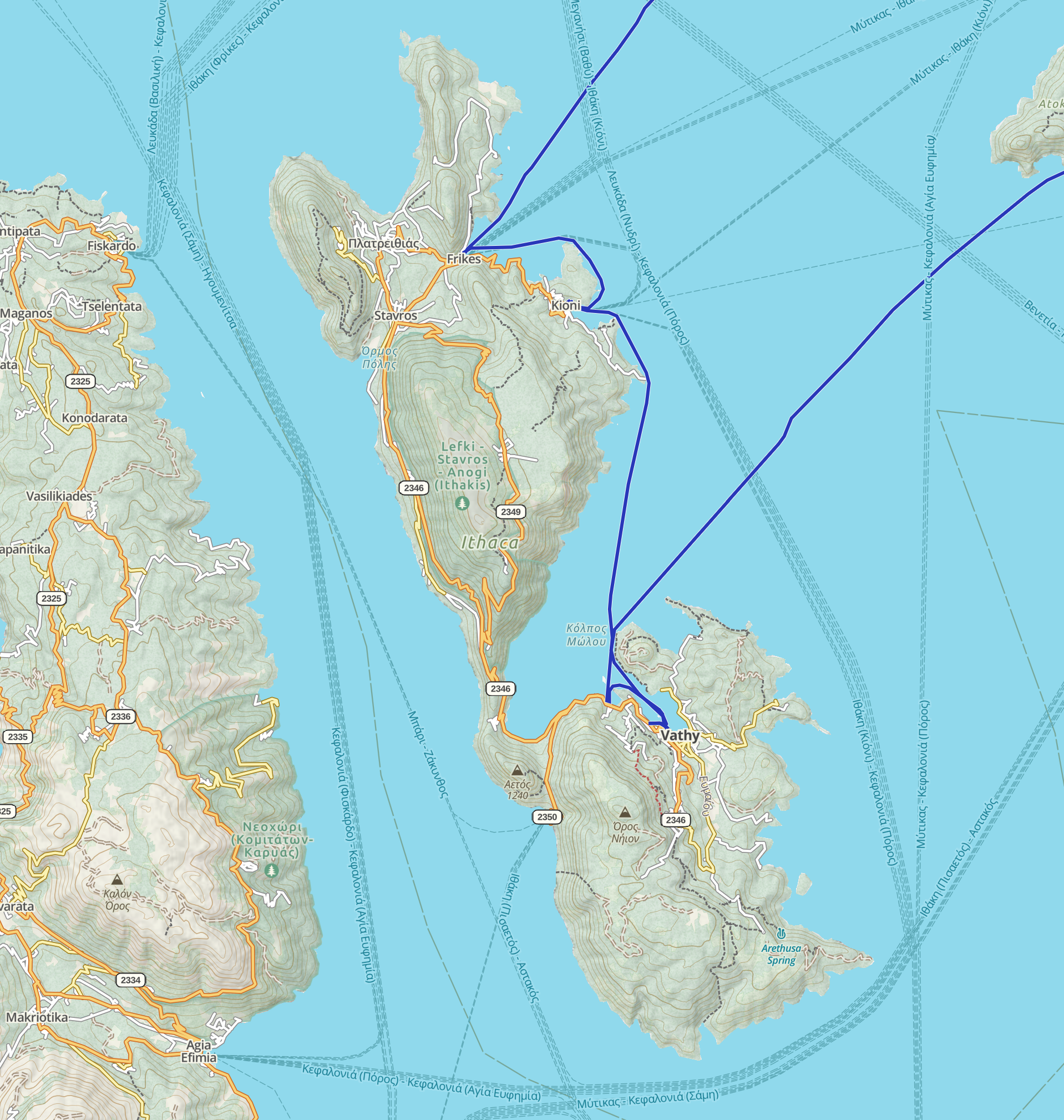
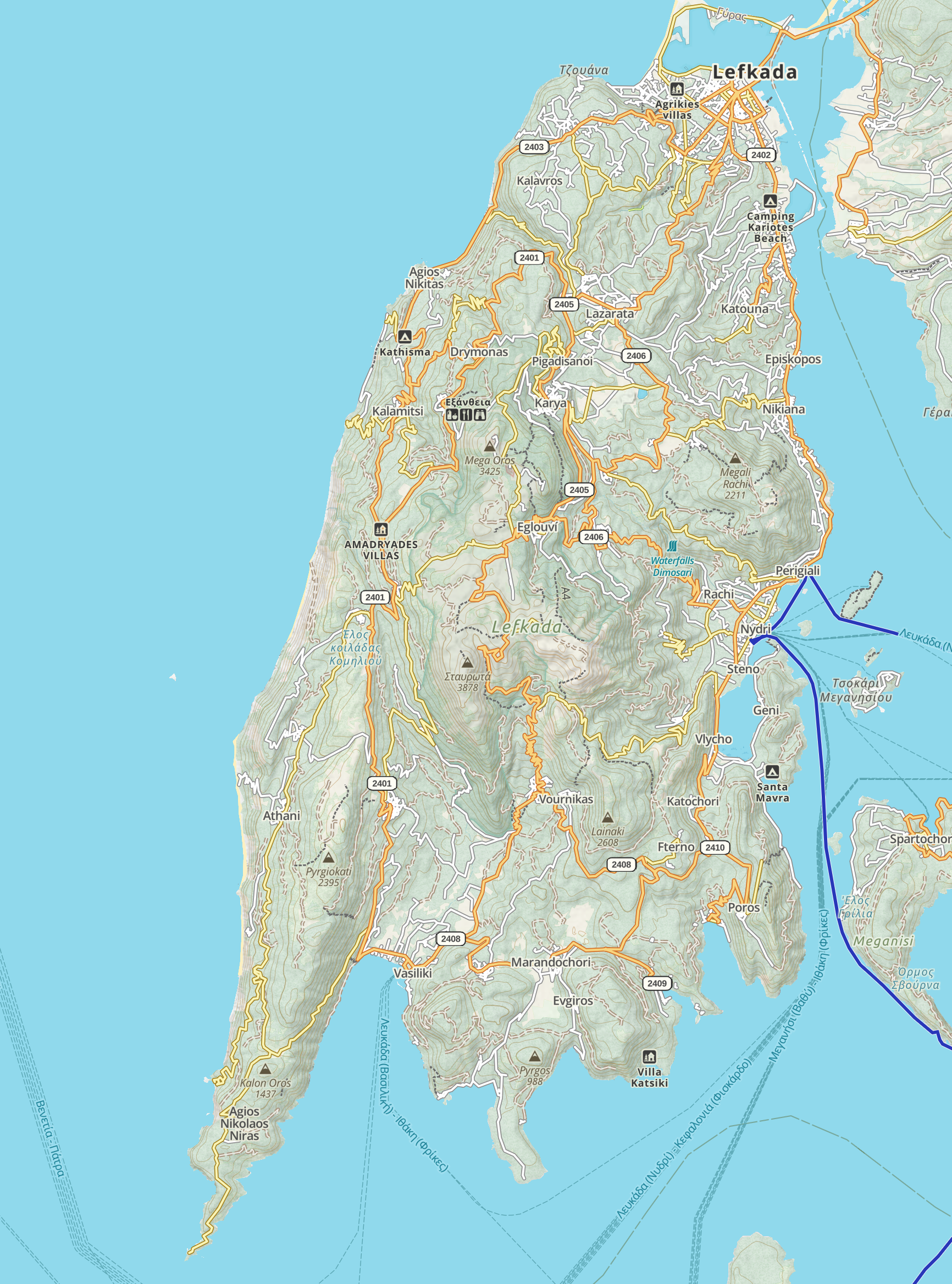
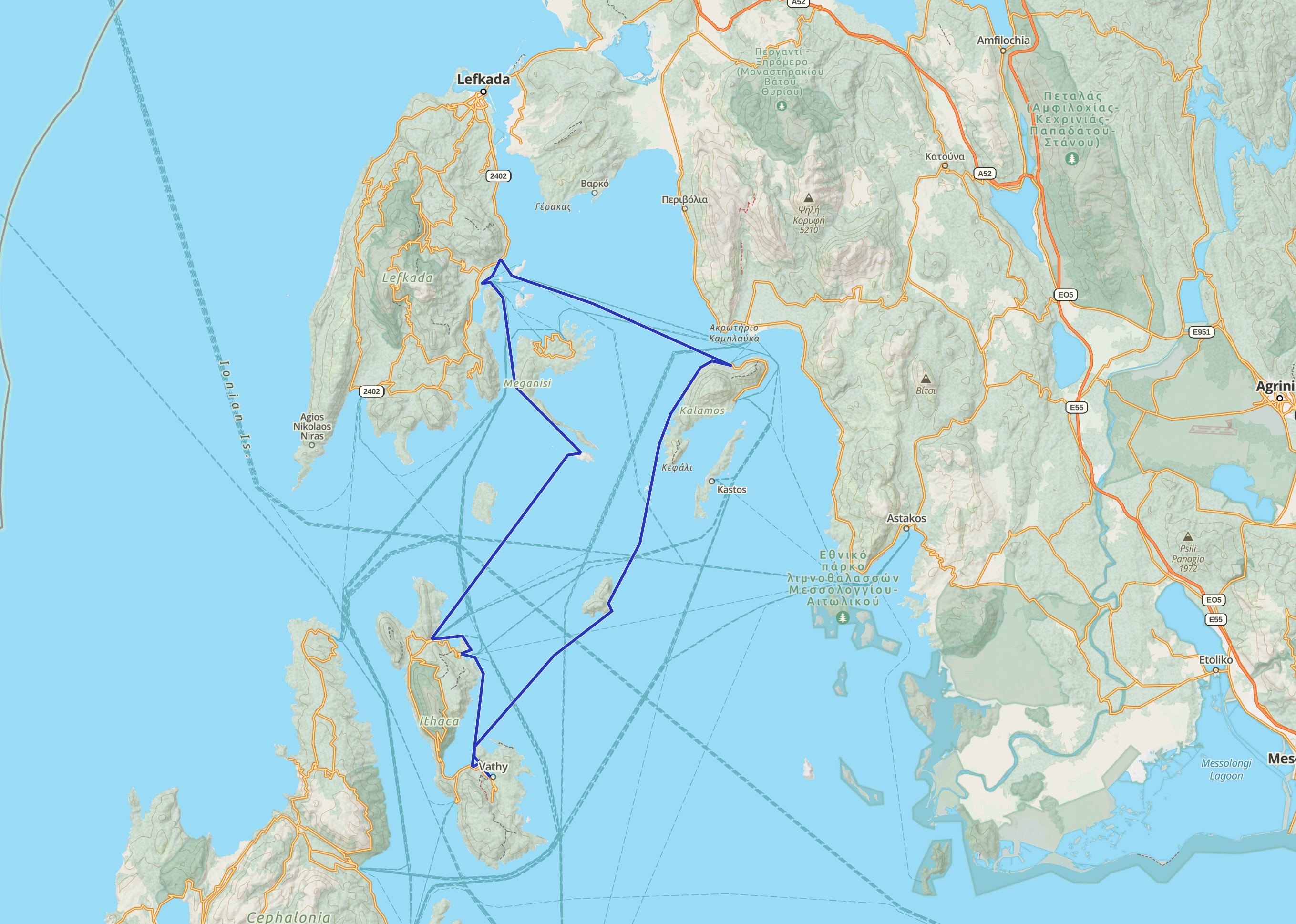
Was Lefkada actually the “Ithaca” of Odysseus?
- Wilhelm Dörpfeld, the successor to Heinrich Schliemann, thought so.
- The people of Lefkada certainly embrace this idea!
My native land is Ithaca, a sunlit island
With a forested peak called Neriton,
Visible for miles. Many other islands
Lie close around her—Doulichion, Samē,
And wooded Zacynthos—off toward the sunrise,
But Ithaca lies low on the evening horizon…
— Homer, Odyssey, 9.24–9.29
…Twenty men together
Could not match his wealth. Let me count it for you.
Twelve herd of cattle over on the mainland,
And as many flocks of sheep, droves of swine,
And spreading herds of goats—all of them pastured
By his own herdsmen or hired foreigners.
— Homer, Odyssey 14.110-14.115
Introduction to Drones
- Available to anyone who is willing to put in the time to figure out some stuff, and who can afford to travel internationally. Budget $1,200 for the Drone, memory cards, and extra batteries.
- The culmination of technologies that arose during our lifetimes!
- Battery tech. Light and powerful. Tiny super-computers, like in your phone. (Anecdote from the Netflix show “Farthest”, about the Voyager Spacecraft, c. 1972. Recommended!). GPS: President Clinton turned off “selective availability” and deserves credit for transforming the world with that decision. WIFI. Digital cameras. Remember the “camcorders” of the 1980s? These modern drones can do 4k video, stored on a tiny chip, with stunning image-processing (see “super-computers”, above).
The result:
Black Magic Voodoo. And fun vacation pics!
- DJI Mini 4 Pro.
- Six batteries.
- The fancy controller (not the cheap one that uses your phone.)
- You have to manage: altitude, speed, yaw (rotation), direction-of-flight, camera-tilt, camera-zoom.
- This is too much! So you have to take advantage of the amazing computation built into these little things.
Programmatic Drone Shots!
Which is not to say that still photography can’t be magical!


Thank you!
Contact: christopher.blackwell@furman.edu
We will happily share any of the media files from this presentation, however might be helpful.